






How adaptive planning is being used to future-proof water supplies in the South East

Contents |
[edit] Introduction
Water Resources South East (WRSE) is one of five regional groups collaborating with government, stakeholders and regulators to develop the first region-wide infrastructure investment plans for water resources. Regional plans were born from the Environment Agency’s 2020 National Framework for Water Resources, which first set out the scale of the national challenge – and the need for much greater collaboration to meet it.
Each regional group has its own unique challenges – and the South East is the biggest of any in the country. Our region’s climate is warmer than the rest of England, and some parts are so densely populated that they have less water per head than many Mediterranean countries.
The South East of England is home to most of the country’s iconic chalk streams - which face their own pressures from climate change and our historic reliance on them for high-quality water resources.
Meeting these challenges requires answering one major question – how do we effectively plan low regret, but highly adaptable and resilient infrastructure fit for the 21st and 22nd centuries?
[edit] Using an adaptive planning approach
A key part of our response is to embrace adaptive planning. Through extensive modelling – shaped by stakeholders’ and customers’ views – and working with our member companies, we’ve produced our emerging regional plan based on different adaptive pathways.
The first 15 years are based on our central pathway, the most representative of the full range of potential scenarios to 2040. We have outlined solutions to become resilient to a one-in-500-year drought – the level proposed by the National Infrastructure Commission. This pathway provides a flexible foundation for the future, giving us the platform to adapt to even the most ambitious, or challenging, long-term scenarios.
After 2040, our plan splits into three pathways, covering a wider range of potential scenarios. Each of these will enable us to meet the abstraction reductions needed, and the pathway we take will depend on what the future looks like - so we’re treating each as equally likely while we understand the uncertainties.
 Scenarios by 2060 of how much water could be needed to meet future population growth. Scenarios by 2060 of how much water could be needed to meet future population growth.
|
From 2060, our plan splits further into nine pathways reflecting the greater uncertainty over the amount of water we’ll need.
This approach means we can identify all the potential options we might require so we can propose adaptable solutions to meet whichever future does happen.
[edit] The 15-year plan for the South East
From 17 January 2022, we’re consulting on our emerging regional plan, focusing on the first 15 years. Improving environmental sustainability is, by far, the biggest driver for change, and our initial assessment is that improving leakage and water efficiency could meet half our water needs by 2040.
There’s still a need for significant new infrastructure, including new and enlarged reservoirs, water recycling, desalination and enabling infrastructure for transfers within and between regions.
We’ve also worked closely with representatives of large water-using sectors, such as power and agriculture, to understand their needs and explore solutions that can increase their resilience alongside the public water supply.
To give an idea of scale, the investment required over the lifetime of our plan is between £15 billion and £17 billion delivered through companies’ Water Resources Management Plans and business plans.
[edit] New solutions, new challenges
These potential solutions all come with their own potential challenges. We will need new and innovative approaches for the next generation of infrastructure.
We need to embrace new technologies, including desalination and water recycling, and ensure customers are aware of the resilience benefits available, while companies understand customers’ concerns.
Transferring water poses distinct challenges too, not only in building the physical infrastructure to move water around, but the risks to biodiversity in receiving water courses.
This links to a wider challenge about ensuring our solutions are complementary and work in combination. We need to make sure investment in hard infrastructure doesn’t preclude nature and catchment-based solutions, and the two approaches are mutually supportive and work in harmony.
Through all of this, we must be mindful of our carbon impact. Reducing demand will have an impact on emissions, but so will new infrastructure. We need to embed low, or zero, carbon approaches into our solutions from the earliest design stage.
And above all, we need to ensure our plans are adaptable for the wide range of futures we’re facing.
Meeting these challenges won’t be easy. We need to be more dynamic and flexible than we’ve been before while being mindful of future uncertainty, changing government policy and increasing cost challenges faced by customers and businesses.
This article originally appeared on the Infrastructure Blog portion of the ICE website. It was written by Trevor Bishop, organisational director for WRSE and published on 17 January 2022.
--The Institution of Civil Engineers
[edit] Related articles on Designing Buildings
Featured articles
Check out some of the best features and news from Designing Buildings as well as key stories from around the web.
Leaders in Learning for Practice Network

Call for conservation leaders in learning to register interest in new network.
The importance of early engagement

Construction lessons from the Trillium HealthWorks Experience Centre.
Mayors are to be given planning call in powers

Mayors across England will be able to make the most important planning decisions.

The Master Builder: William Butterfield and his times. Book review.

Why construction can't afford to ignore the skills gap.
Building Safety Regulator, 19 August

Gill Kernick appointed Independent Chair of Residents’ Panel.
Connecting knowledge, technology and conservation
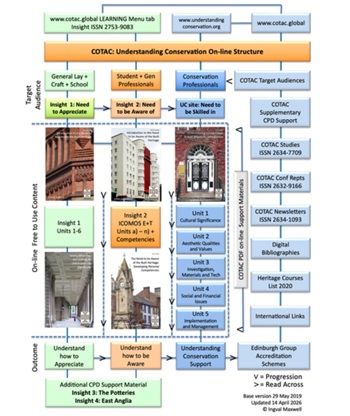
Building competence for the future of built heritage.
Building Regulations and Building Safety Act
CIOB publishes free advice for non-domestic clients.

Building Safety Newsletter from MHCLG.
An extraordinary record of steel engineering worldwide.
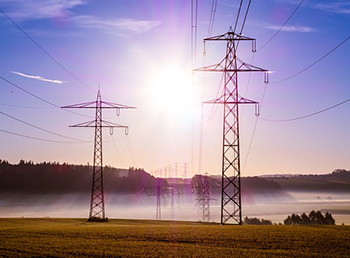
Households living near new pylons to save on bills.

ECA warns growth must not outpace grid capacity or skills.
Comments
Wow thanks for this article, It really helped me a lot it has a very good Context.